
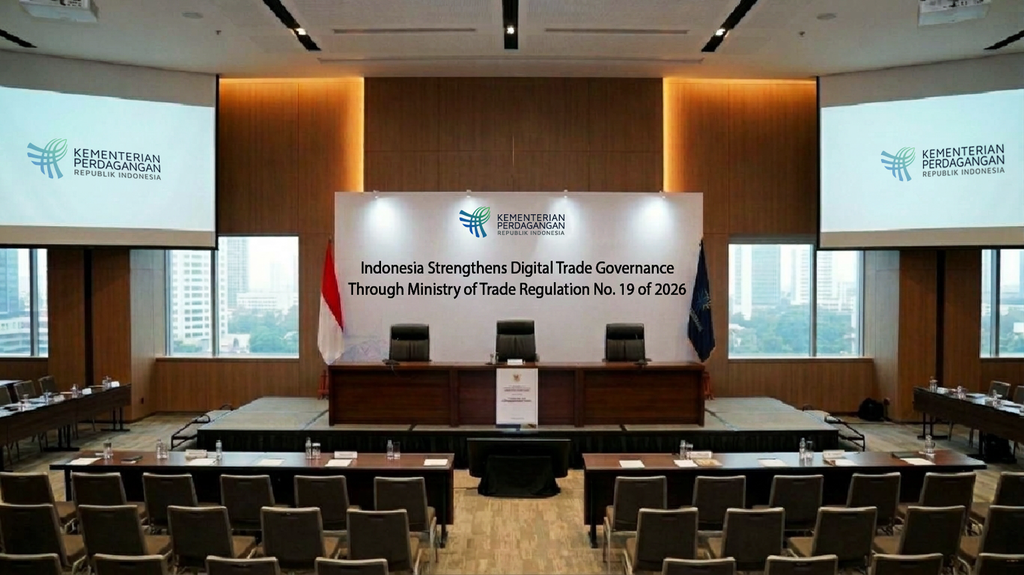
Indonesia has updated its regulations on trade through electronic systems (PMSE) via Ministry of Trade Regulation No. 19 of 2026 concerning the Conduct of Trade Through Electronic Systems (PMSE). This regulation replaces Minister of Trade Regulation No. 31 of 2023 and strengthens provisions regarding business licensing, consumer protection, digital platform governance, and the enhancement of domestic product competitiveness within Indonesia’s digital trade ecosystem.
One of the aspects being strengthened is business operator licensing compliance. Business operators conducting trade through electronic platforms are required to hold a business license, namely the Business Identification Number (NIB). In addition, operators of e-commerce platforms also have obligations regarding cost transparency, promotional policies, and increasing the visibility of domestic products and those from micro and small businesses.
Ministry of Trade Regulation No. 19 of 2026 also expands the scope of business models included in the PMSE ecosystem. In addition to commerce via online retail, marketplaces, classified ads, price comparison sites, and daily deals, this regulation also covers social commerce, ride-hailing, and online travel agents (OTAs) in the context of commercial activities conducted through electronic systems. This regulation also accommodates developments in digital technology, including the use of artificial intelligence (AI) in commercial activities.
For foreign companies and business operators wishing to conduct digital commerce activities in Indonesia, compliance with PMSE regulations must be viewed as part of the overall market entry and regulatory compliance process. While obtaining an NIB and meeting PMSE requirements are essential obligations, certain products also require additional requirements such as import permits, BPOM registration, halal certification, adherence to SNI standards, and labeling requirements based on the product’s type and characteristics.
In practice, the implementation of PMSE regulations must be factored into a company’s planning of commercial activities in Indonesia. For companies entering the Indonesian market through digital channels, understanding e-commerce regulations must go hand in hand with compliance with business licensing and other sector-specific requirements. This is a key aspect to consider in the regulatory compliance and market entry process, particularly for foreign companies seeking to expand their business operations in Indonesia.