
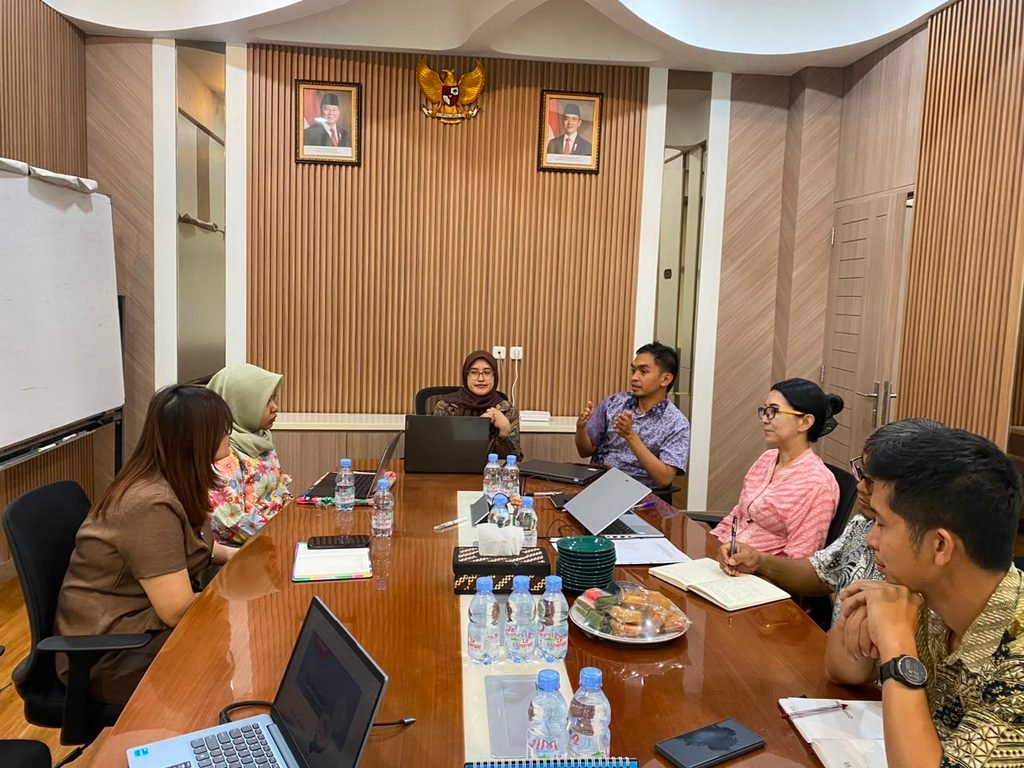
Bandung, 15 September 2026 — On Tuesday, 15 September 2026, AMQ Strategic Partner conducted a technical consultation with Balai Besar Industri Mineral & Logam (BBLM) regarding the mandatory Indonesian National Standard (SNI) certification requirements for water meter products.
The consultation aimed to gain a clearer understanding of the SNI certification procedure, factory audit requirements, laboratory testing, annual surveillance, estimated certification costs, and technical conformity requirements under SNI 2547:2024.
The meeting also included a preliminary technical assessment of the EW300 water meter, providing important insights into several product specifications that may need to be reviewed before proceeding with formal SNI certification and laboratory testing.
Understanding the Mandatory SNI Certification Process for Water Meters
During the consultation, BBLM provided an overview of the certification pathway for water meter products. All required documentation must be prepared and submitted through SIINas as part of the mandatory SNI certification process.
The SNI Certificate is valid for five years. However, maintaining the certification requires an annual surveillance audit, during which the relevant products are subject to retesting in a manner similar to the initial certification process.
For products manufactured overseas, such as those manufactured in China, the certification process also requires coordination between the foreign manufacturing facility and the designated Indonesian testing laboratory.
Certification and Surveillance Require Ongoing Regulatory Investment
Another important topic discussed during the consultation was the estimated cost associated with initial SNI certification and subsequent surveillance.
Based on the information provided during the meeting, the estimated PNBP for the initial SNI certification and annual SPPT SNI surveillance is approximately IDR 65–70 million, excluding accommodation, transportation, airfare, and other overseas travel-related expenses.
Although surveillance follows many of the same assessment principles as the initial certification process, one of the differences discussed during the meeting is that the endurance test is not required during surveillance.
The annual surveillance requirement highlights that SNI certification should be viewed as an ongoing compliance commitment, rather than a one-time approval process.
Laboratory Testing Is a Critical Part of Product Conformity
Laboratory testing represents another important component of the SNI certification process.
Testing is conducted according to the relevant requirements and parameters stipulated under the applicable Indonesian National Standard. Depending on the characteristics of the water meter, testing may involve multiple technical parameters and may require coordination with different testing facilities.
A sufficient number of product samples must also be prepared for both laboratory testing and archive/reference purposes.
For products manufactured overseas, the applicant and manufacturer must therefore carefully coordinate the preparation and shipment of samples to the designated testing facilities in Indonesia.
Technical Assessment Should Be Conducted Before Formal Certification
One of the key insights from the consultation was the importance of conducting a preliminary technical assessment against the applicable SNI requirements before proceeding with formal certification and laboratory testing.
For water meters, technical conformity may involve various product characteristics, including dimensions, overall length, pressure loss, thread specifications, flow-related parameters, and other technical requirements stipulated under the applicable standard.
Products manufactured according to specifications used in other markets may not automatically comply with Indonesian requirements. Differences in technical parameters can therefore require manufacturers to review or adjust their product design before proceeding with the certification process.
Conducting this assessment at an early stage can help identify potential conformity gaps and allow manufacturers to prepare the appropriate product configuration before formal testing begins.
SNI Compliance Requires Continuous Monitoring
Another important takeaway from the consultation is that regulatory compliance continues after the initial SNI Certificate has been obtained.
The annual surveillance process is intended to verify that certified products and manufacturing processes continue to comply with the applicable requirements throughout the certification period.
Manufacturers and Indonesian representatives should therefore maintain proper technical documentation, quality controls, product consistency, and readiness for periodic surveillance activities.
This makes regulatory compliance an ongoing part of market operations rather than simply an initial market-entry requirement.
Through this consultation with BBLM, AMQ Strategic Partner strengthened its practical understanding of the mandatory SNI certification framework for water meters, covering SIInas submission, overseas factory assessment, product sampling, laboratory testing, technical conformity assessment, and annual surveillance.